What AI calling is
A traditional auto-dialer plays a recording or connects you to a person. An AI calling agent does neither: it listens to what the other person says, decides what to say next, and speaks it, turn after turn, for the length of the call.
That difference matters because it changes what a call can be used for. A recording can only deliver a message. An agent can ask a question, hear an unexpected answer, and respond to it. It is the difference between broadcasting and having a conversation, however narrow that conversation is.
The anatomy of a call
Every turn of every AI call runs the same loop. Understanding it explains most of what is good and most of what is frustrating about the technology.
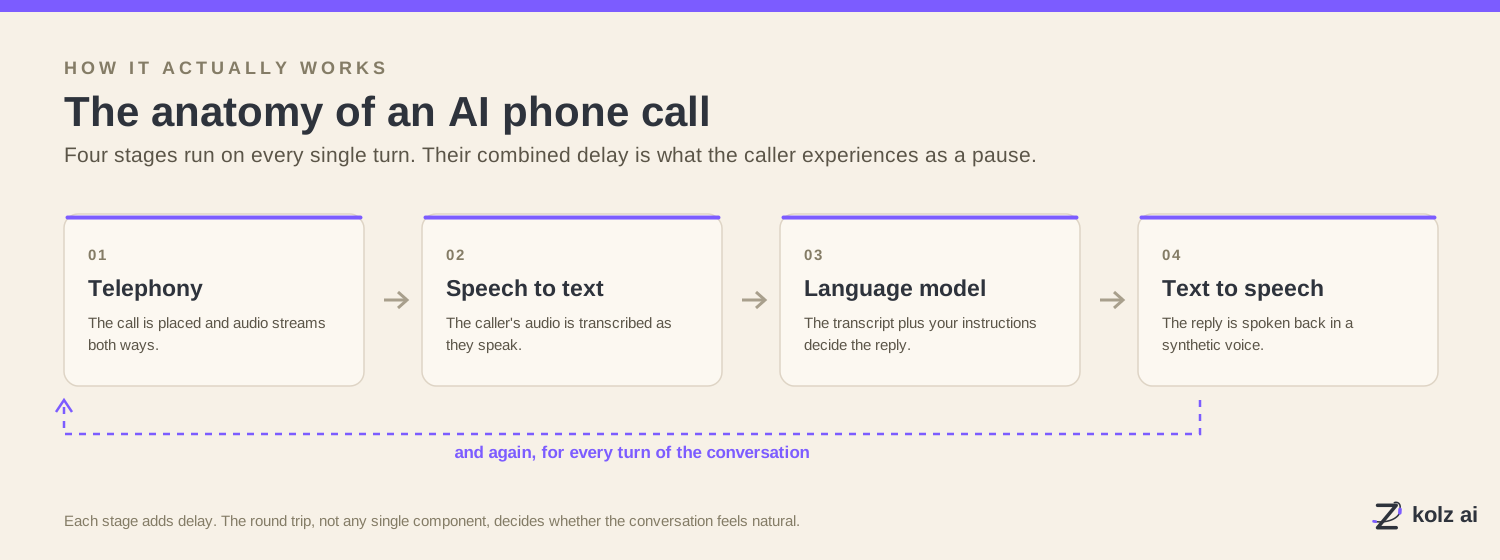
The important consequence is that latency is cumulative. Each stage is fast on its own, but the caller experiences the total. When an AI call feels stilted, it is usually this round trip being audible as a pause before every reply, not the words themselves being wrong.
It also explains why interruptions are hard. A person who starts talking over the agent has to be detected, the agent's speech stopped, and the loop restarted with the new input. Handling that gracefully is one of the clearest differences between a polished platform and a rough one.
Where it stands in 2026
The honest summary is that the voices stopped being the problem, and the conversation design became the problem.
Synthetic speech is now good enough that the voice itself is rarely what gives an agent away. What gives it away is behaviour: answering a question that was not asked, missing that someone is annoyed, or ploughing through a script when the call has obviously gone somewhere else.
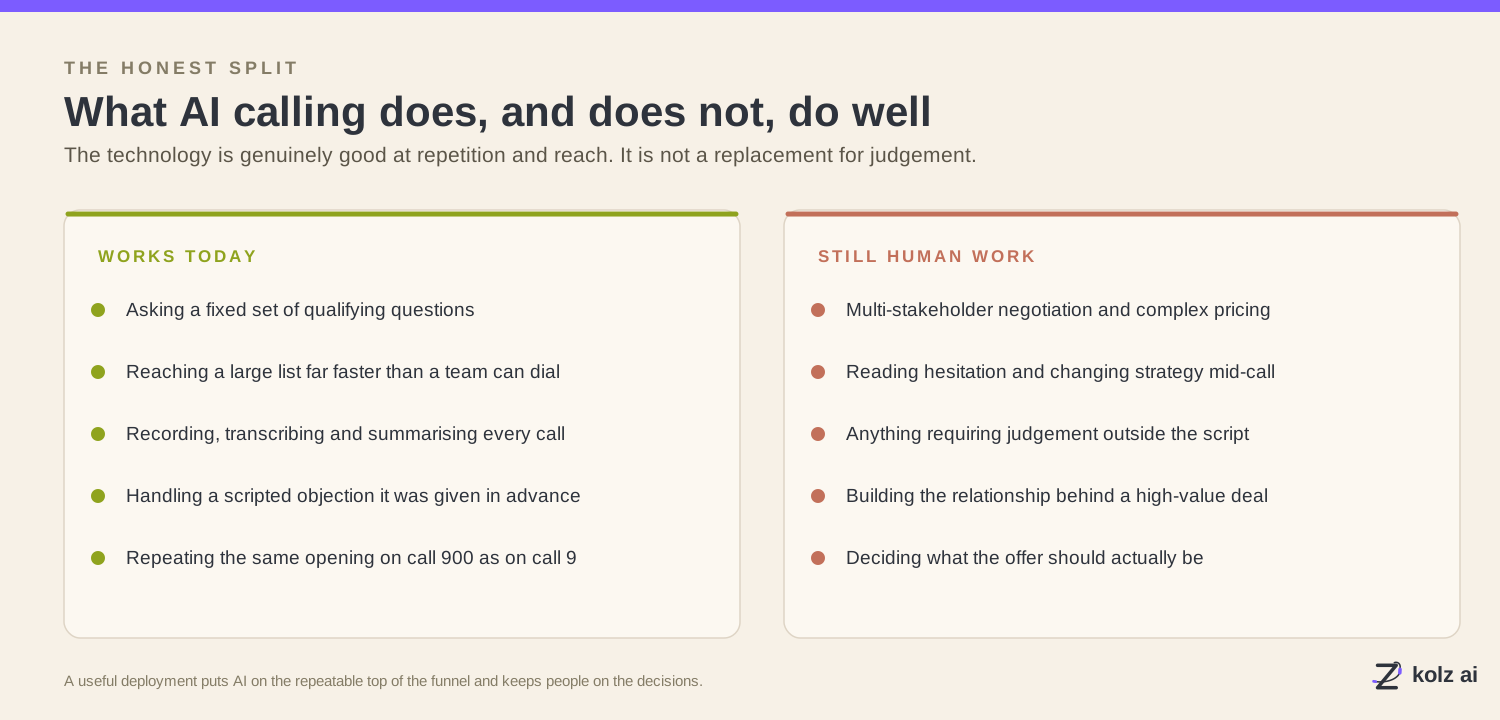
So the practical state of the technology is narrow competence. Give an agent one clearly bounded job, with the questions defined and the edge cases anticipated, and it performs that job consistently across a list no human team could work through at the same speed. Give it a broad or ambiguous job and the quality falls off quickly.
What it does and does not do
The useful framing is not "can AI replace a salesperson" but "which parts of a salesperson's week are repetition." Those parts transfer well. The rest does not.
Why the pricing varies so much
Quoted prices for AI calling differ by an order of magnitude, mostly because vendors are not all pricing the same thing. There are three common structures.
Per component
You are billed separately for telephony, transcription, the language model and the voice. Flexible, but the final bill is only knowable after the fact.
Developer platforms
Per minute, all in
One rate covers the whole stack. Less control over individual components, but the campaign cost is arithmetic you can do in advance.
Kolz AI, at $0.03/min
Per seat or licence
A monthly fee per user, often with usage on top. Predictable, but the cost does not fall when you run fewer campaigns.
Legacy dialer software
When comparing quotes, the number that matters is the all-in cost of one representative call, including every component and any minimum billing increment. A headline per-minute rate that excludes the model and the voice is not comparable to one that includes them. Our own costed comparison of a 10,000-call campaign works through one of these calculations line by line.
The consent rules
This is the part most often skipped, and it is the part that carries real liability. In the United States the FCC has ruled that AI-generated voices count as artificial voices under the TCPA, which means telemarketing calls using them generally require prior express written consent. Having someone in your database is not the same as having that consent.
Beyond consent, the operational requirements are consistent across most jurisdictions: disclose that the caller is an AI, honour opt-outs immediately and permanently, respect local calling windows in the recipient's timezone rather than yours, and follow recording-disclosure rules where they apply. Rules differ by country and by state, so check the ones that cover the people you are actually calling.
See the FCC ruling and our compliance guidance. Neither is legal advice.
How to evaluate a platform
What is the real concurrency?
A platform that accepts a 10,000-row list is not promising 10,000 simultaneous calls. Ask how many run at once, and whether extra capacity costs more.
What is in the quoted rate?
A low headline per-minute price often excludes transcription, the model and the voice. Ask for the all-in figure for a representative call.
Can a person take over?
Live transfer to a human matters the moment a caller is ready to buy or asks something outside the script.
What comes back afterwards?
Recordings, transcripts and structured outcomes are the difference between a campaign you can learn from and a black box.
How are opt-outs handled?
Suppression needs to be immediate and permanent, and it needs to survive your next upload.
Where Kolz fits
Kolz AI is one option in this category, built for the narrow-competence case described above: you upload a spreadsheet, configure one clearly bounded conversation, and get back scored results with recordings and transcripts. It charges a single all-in rate of $0.03 per minute rather than billing the components separately, and it runs campaigns in parallel rather than asking you to buy concurrency.
It is not the right tool for everything on this page. If you need a custom voice application with bespoke logic, a developer platform will fit better. If your calls need judgement rather than qualification, they need a person.