AI Sales Agents vs. Human Callers
In this piece
Will artificial intelligence replace your entire sales team? Not exactly. Discover why the most profitable B2B sales floors aren't choosing between AI and humans, they're combining them. Learn how conversational AI for sales complements human closers by handling the top-of-funnel heavy lifting.
On this page
The Great Sales Debate: Man vs. Machine
As conversational AI for sales becomes increasingly sophisticated, a clear divide has formed in the business world.
On one side are the tech-evangelists who believe AI sales agents will completely eradicate the human salesperson within the next three years. On the other side are the traditionalists who argue that "people only buy from people," entirely dismissing the role of AI in complex B2B sales cycles.
Both extremes are fundamentally wrong.
The strongest sales operations in 2026 are not choosing between a 100% human team and a 100% autonomous AI team. They assign repetitive first-touch work to automation while keeping judgment, negotiation, sensitive conversations, and closing with people.
To understand how to deploy AI in sales effectively, you have to understand the inherent strengths and weaknesses of both man and machine.
The Strengths of the Human Caller
Despite the rapid advancement of Large Language Models (LLMs), human beings still possess critical evolutionary advantages in a sales environment:
- Deep Empathy: A human can sense microscopic changes in tone, frustration, or excitement and adjust their pitch with genuine emotional intelligence.
- Complex Negotiation: Multi-threaded enterprise deals involving custom pricing logic, legal redlines, and multiple stakeholders still require a human closer.
- Relationship Building: In high-ticket sales, the relationship between the buyer and the Account Executive often dictates the final signature. People really do buy from people they trust.
The Weakness:
Humans are incredibly expensive, prone to burnout, and physically limited by time. A human SDR is frankly wasted spending six hours a day dialing disconnected numbers, leaving voicemails, and speaking to gatekeepers just to find one qualified lead.
The Strengths of the AI Sales Agent
An AI sales agent is built for high-volume, top-of-funnel work. It excels precisely where humans fail:
- High-Volume Calling: An AI voice agent can work through a list of thousands of numbers in a single campaign, dialing 300+ calls in parallel instead of one at a time.
- Consistent Execution: The AI does not get tired or lose focus. It applies your qualification criteria the same way on call one and call one thousand, and stays on-script for your brand messaging.
- Lower Cost Per Call: Using a Pay-As-You-Go model (like Kolz AI's flat $0.03-per-minute rate), you pay pennies per connected call, well below the $80,000+ a year many companies spend on a human SDR's base salary.
The Weakness:
An AI agent cannot handle a non-linear, multi-stakeholder enterprise negotiation. It cannot take an executive out to lunch, and it cannot dynamically rewrite a complex legal contract on the fly.
Finding the Balance: The "Cyborg" Sales Floor
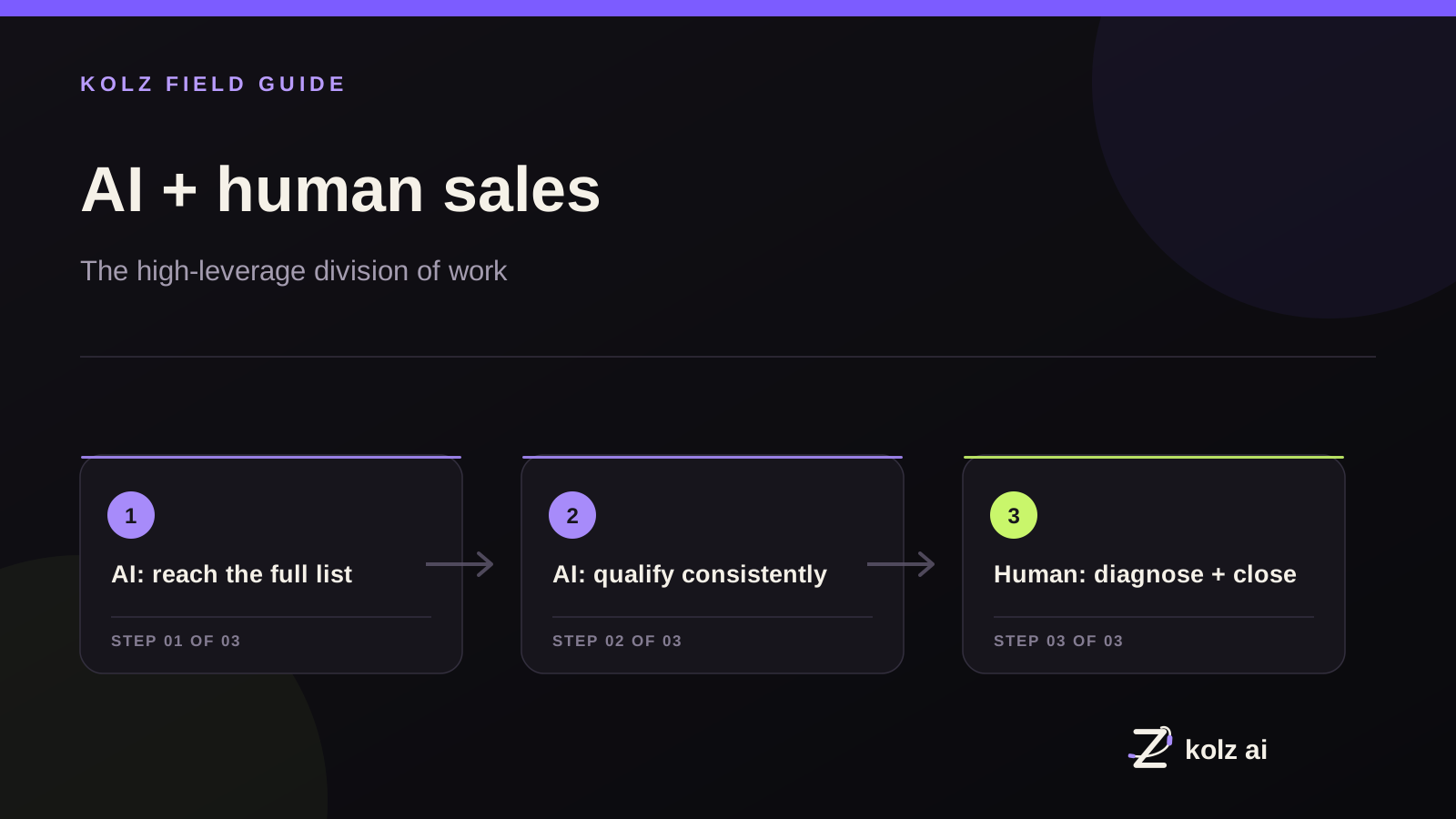
When you map the strengths of the human against the strengths of the machine, a practical sales architecture comes into focus. You divide your sales funnel into two distinct zones:
Zone 1: The AI Handles the Cold Outreach (Top-of-Funnel)
You deploy an AI sales agent to do the dirty work. Instead of forcing human reps to sit on a predictive dialer for hours, you upload a massive list of cold numbers into a platform like Kolz AI. The AI handles the voicemails, navigates the receptionists, and engages the decision-makers.
The AI is programmed with a single, highly focused goal: Qualify the lead based on interest.
Zone 2: The Human Handles the Close (Bottom-of-Funnel)
Once the AI determines a prospect is genuinely interested, it generates a "Lead Score" and a short summary of the conversation.
This is where your highly paid, highly skilled human Account Executives take over. They only look at the "Hot Leads" generated by the AI platform. They pick up the phone to continue the conversation, leveraging their deep empathy and negotiation skills to close the deal.
Implementing the Model with Kolz AI
Finding this balance doesn't require complex API integrations or developer teams.
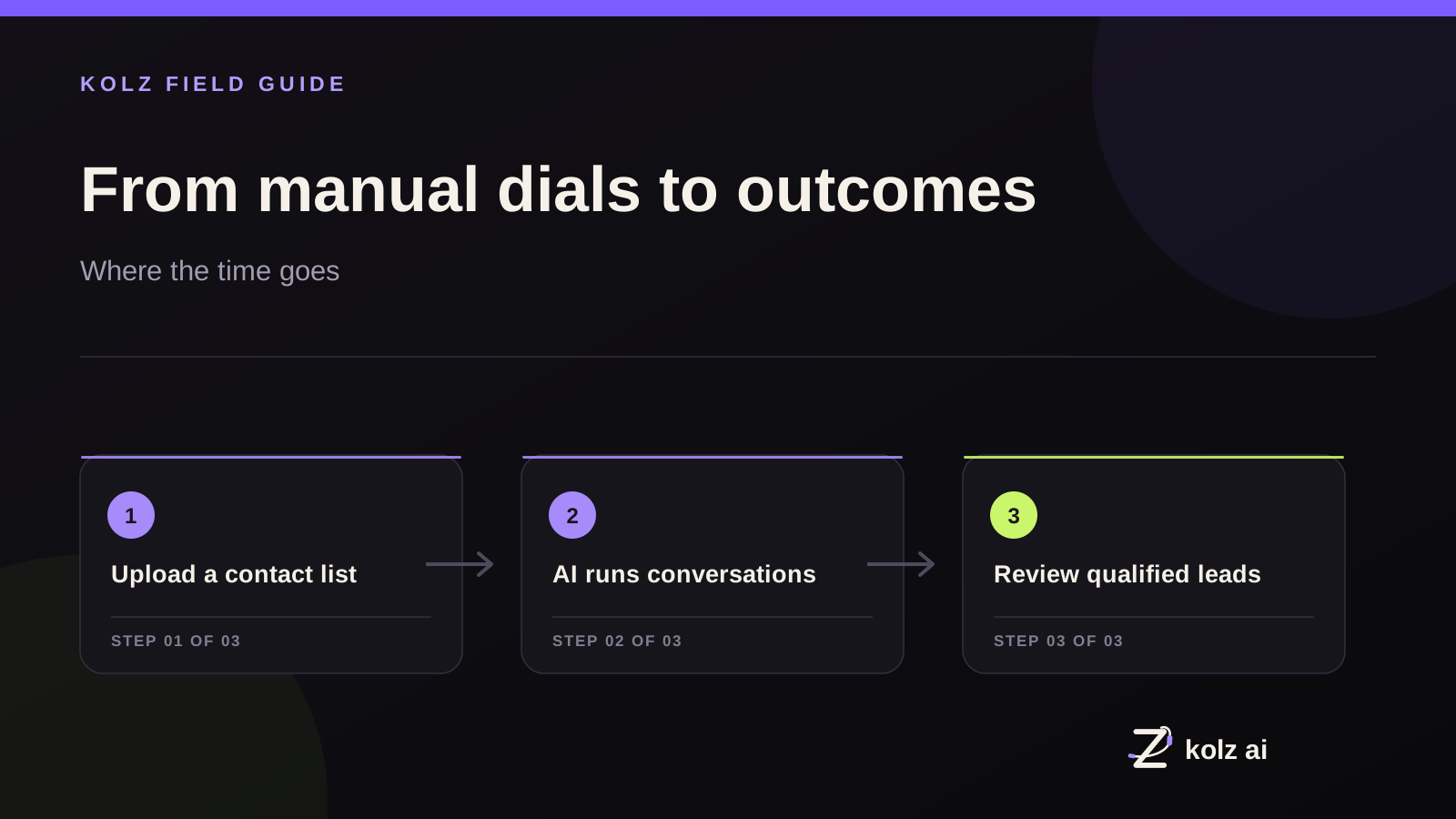
Kolz AI was designed specifically to facilitate this "cyborg" sales floor using a simple "Excel-In, Excel-Out" workflow:
- Excel In: Upload your massive list of raw phone numbers.
- The AI Dials: The Kolz AI conversational AI works through your list, running 300+ calls in parallel.
- Excel Out: You download an enriched spreadsheet where the AI has added a completely new column separating the "Hot Leads" from the "Cold Leads," alongside a direct link to the call recording.
Your human closers simply filter the Excel file for the Hot Leads and do what they do best: Build relationships and close revenue.
Conclusion
The fear that AI will replace human sales organizations is unfounded. The companies that pull ahead of their competitors are the ones that learn to deploy AI in sales strategically.
By letting a tireless, highly scalable AI handle the cold prospecting, you free up your human talent to focus on closing deals. It's not about man versus machine; it's about the machine empowering the man.
Ready to balance your floor? Launch your first automated campaign at Kolz AI today.
Ready to try AI-powered calling?
See how Kolz AI can automate your outbound calls, qualify leads, and scale your customer outreach.
Test with 100 free minutes