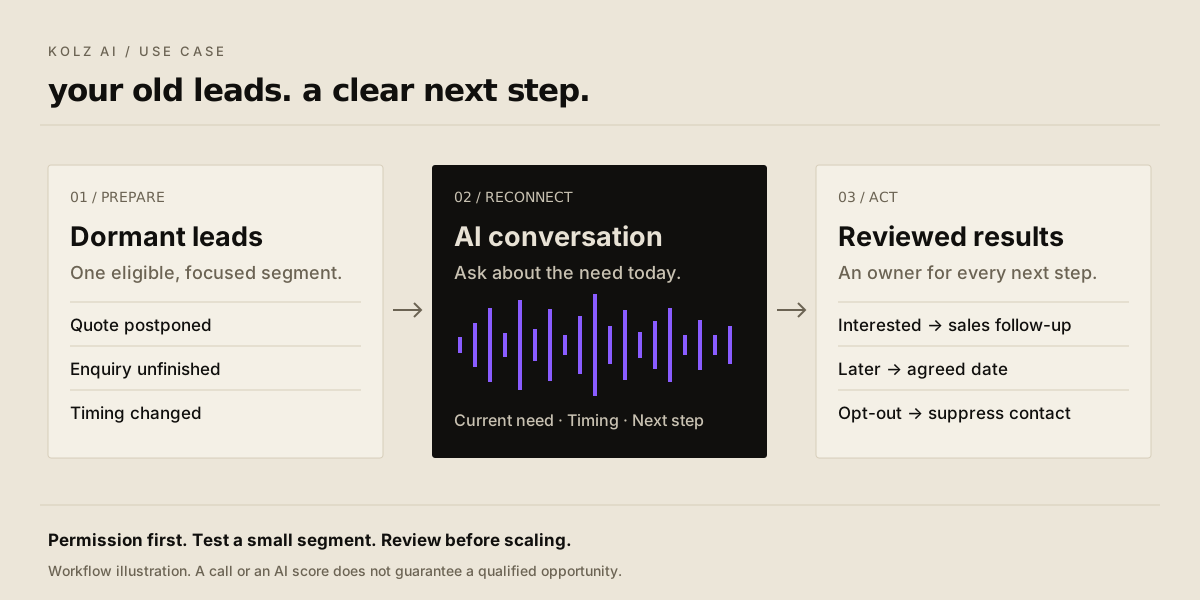
What database reactivation means
A quiet lead is not always a lost lead. Budgets change, projects restart, and a “not now” can become a “let’s talk.” The challenge is finding those changes across a database your team no longer has time to work through.
Database reactivation is contacting people already in your records to find out whether an earlier need is relevant again. It is defined by the audience, not the channel: the same practice runs over email, SMS or the phone. What makes it distinct from cold outreach is that a prior relationship exists and can be referenced accurately.
A useful outcome is not only a sale. An interested buyer, a requested callback, a clear “not now” and an opt-out all make your records more accurate than silence does.
Reactivation vs cold calling
| Question | Reactivation | Cold calling |
|---|---|---|
| Who is contacted? | Someone already in your records | A prospect without a prior conversation |
| Where does the opening start? | Verified past context and what changed | An introduction and reason for the call |
| What are you finding out? | Whether a previous need is current | Whether there is an initial relevant need |
| Is permission automatic? | No. Old enquiries do not establish every type of consent. | No. Being on a prospect list does not grant consent. |
AI is the calling method; reactivation describes the audience and purpose. Neither guarantees a higher conversion rate. Compare pilot results for your own segments.
What changes with AI?
01 / SPEED
Less waiting between conversations
A configured agent can repeat the outreach workflow across your list, reducing the manual work of dialling, asking the same opening questions and writing up each response.
02 / SCALE
One campaign. A larger list.
Parallel calling can move several conversations forward at once. Actual throughput depends on available concurrency, answer rates, call length and permitted calling windows.
03 / FOCUS
A clearer queue for your team
Separate renewed interest from “later,” wrong numbers and opt-outs. Your salespeople can spend their follow-up time on people who have asked to speak.
How scale works
More conversations in parallel.
One-at-a-time outreach
Parallel outreach
Parallelism reduces the time needed to work through a list; it does not reduce the time each person needs for a useful conversation. Start with a pilot to measure your actual pace.
From spreadsheet to next step.
01
Prepare
Choose one contact segment. Keep verified enquiry context, remove duplicates and opt-outs, and confirm the permissions for your outreach.
02
Test, then run
Whichever tool you use, script the opening, the qualifying questions and what counts as success, then test the conversation on a handful of contacts before applying it to a full list.
03
Review and follow up
Read the outcomes, summaries and transcripts. Assign requested callbacks, update your records and keep opt-outs suppressed.
Measure the effect beyond call volume.
A larger campaign is useful when it creates follow-up your team can act on. Track the journey from a reached contact to a real customer, and compare results across segments.
Reached
People who actually spoke
Interested
A current, relevant need
Followed up
The agreed next step happened
Converted
A verified business outcome
AI cannot create demand where none exists. List quality, a relevant offer and timely human follow-up still decide the result. Increase volume only as fast as your team can handle the responses.